Influences from North African, Ottoman, Indian cuisines, nomadic Bedouin culture and significant input from the Levant, North Africa, Ottoman Empire, and South Asia.
These desserts are integral to the country’s hospitality and festive traditions.
They often feature ingredients like nuts, honey, and spices.
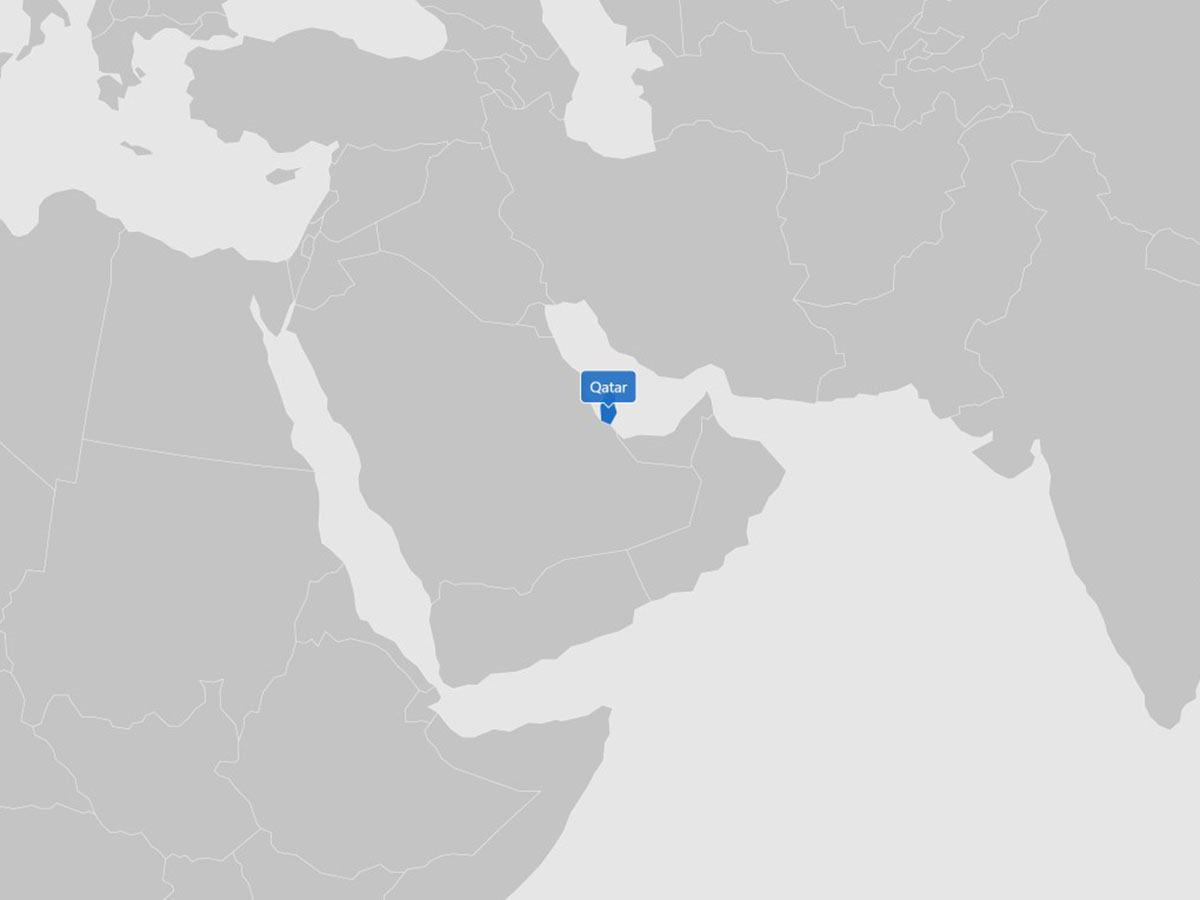
Qatari dishes are food offerings belonging to Qatar, a country in West Asia. These dishes are significantly influenced by Ottoman cuisine (which is now often associated with Turkish dishes), North African dishes, and Indian specialties.
Several Qatari dishes have their roots in the Arabian Peninsula and Bedouin traditions and are typically served during Ramadan. Moreover, these traditional foods mainly focus on meat, rice, and bread. Machboos, a mixed rice, is the national dish in Qatar.
Qatar’s traditional food, its popularity and healthiness is also discussed later, along with all famous Qatari dishes and several facts about them. Besides, you’ll also uncover the cuisine’s history and local drink pairings.
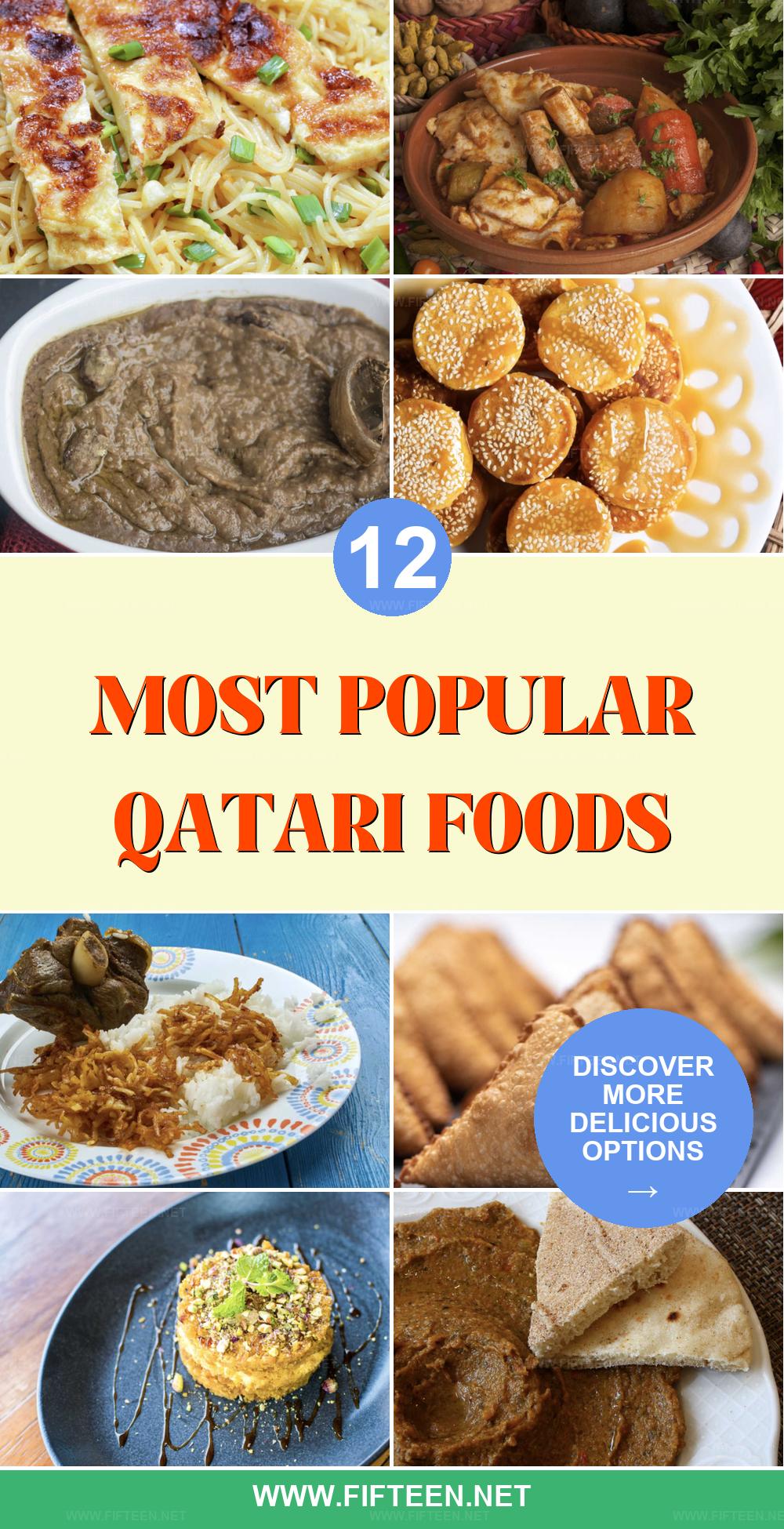
Here are 12 well-loved and popular dishes in Qatar.
Traditional Qatari food incorporates different components to make various kinds of dishes. Presented below are some main characteristics:
Staples: Rice, meat (especially lamb and chicken), and seafood, often enriched with spices like cardamom, saffron, and cinnamon.
Bread: Thin flatbread is a common component, used in dishes like thareed.
Desserts: They often contain dates, flour, milk, and nuts, flavored with cardamom, saffron, and rose water.
Continuing, you’ll look into the reasons behind the global appeal of this cuisine.
The global popularity of Qatari food reflects its drawing heavily from Middle Eastern cuisine, yet maintaining its unique characteristics.
The diversity of Qatar’s food helped spread its popularity with iconic dishes like madrouba or umm ali.
Particularly, the vibrant food in Doha shows Qatar’s growing influence in global gastronomy. From street food markets to high-end dining restaurants, visitors can explore various culinary delights that reflect Qatari traditions and global inspirations.
So are these foods healthy for human health? Continue the reading to get more information.
Food in Qatar can help you to improve your healthy lifestyle in several ways, such as:
Rich in Vegetables and Proteins: The local cuisine includes dishes made with vegetables and lean proteins, such as seafood and chicken, cooked with minimal spices. They also have plant-based options.
Availability of Healthy Dining Options: Qatar offers a range of healthy dining options, including farmers’ markets, organic food stores, and specialized restaurants serving meals that focus on fresh and organic ingredients.
So in case you haven’t known what to eat in this country, keep reading to figure out which one will be your next favorite dish.
12 Popular Qatari Dishes with Filters
Below are Qatar’s 12 most celebrated delicacies. Feel free to use the advanced sorting options to pick your desired dishes.
These selections also range from the most beloved, national, traditional dishes, and street food.
These selections are loved domestically and globally. And machboos is the top number one dish in Qatar.
These dishes preserve the culinary practices and flavors of generations, using local ingredients.
These quick and flavorful options, like fried pastry, provide affordable treats that you can buy at markets.
Machboos
National
Traditional
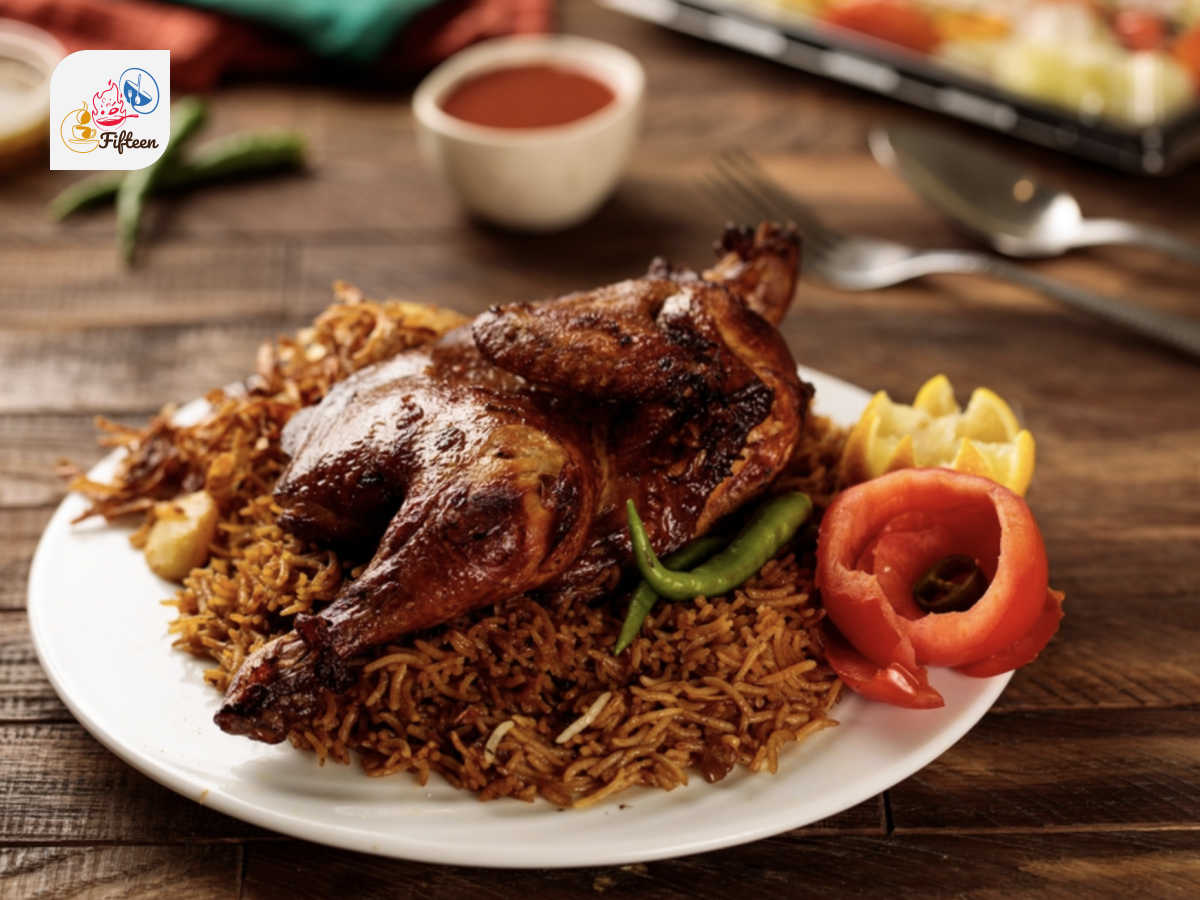
Machboos (or machbous, majboos) is a national rice dish in Qatar, coming from Yemen. Majboos is slow-cooked to combine rice with tender lamb or chicken, fresh vegetables, and spices.
This mixed rice perfectly matches salad and daqqūs (Arabic tomato sauce). Majiboos’ meat is cooked in three traditional methods: mandi (using a barbecued earth oven), mathbi (grilled on flat stones), and madghūt (using a pressure cooker).
You’ll find a hearty serving of machboos on many special occasions and celebrations in the country.
Quzi
Traditional
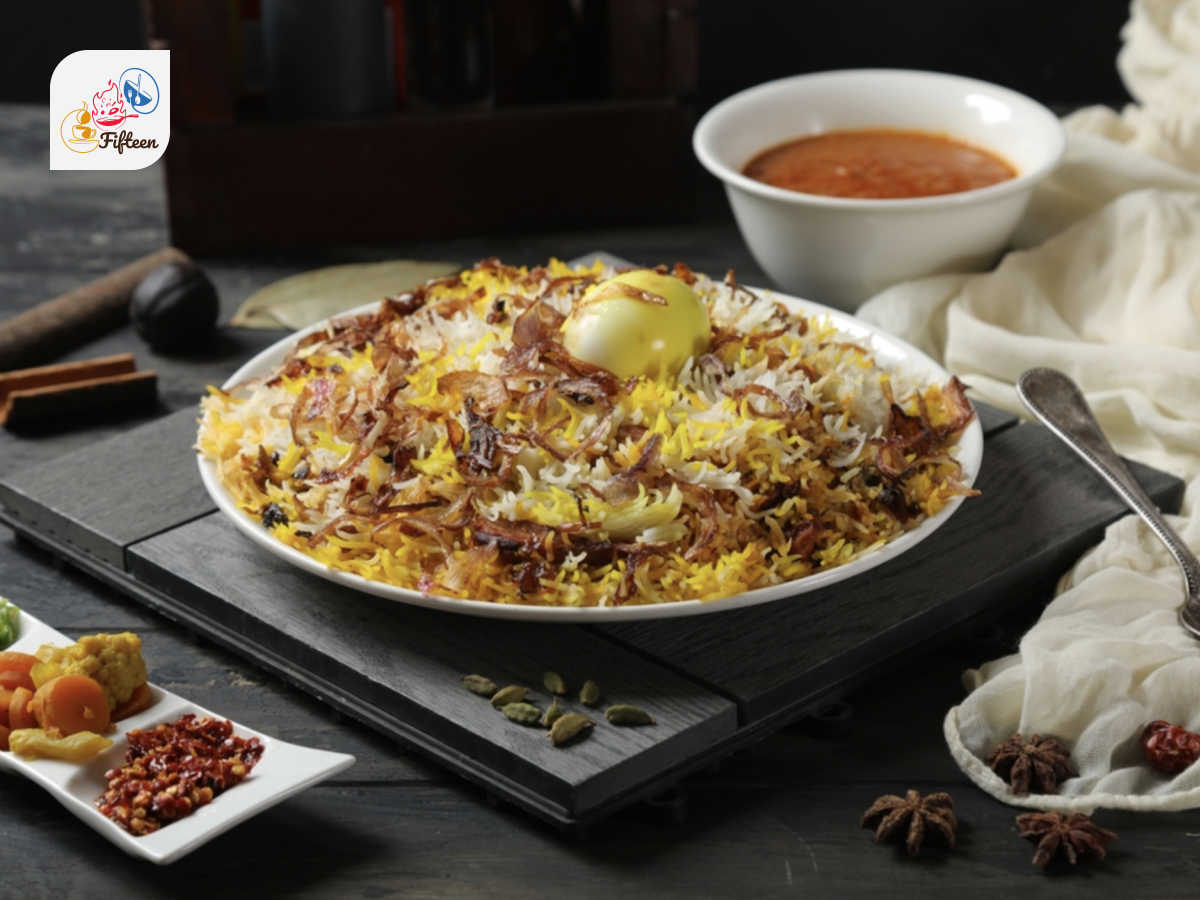
Quzi is a popular rice dish in many regions, such as Qatar, Turkey, and the Gulf countries. Ghoozi’s distinctive character is a whole lamb stuffed and cooked.
Qoozi requires slow-cooking rice with lamb, raisins, roasted nuts, vegetables, and spices. In Iraq, where Quzi is the national dish, people often cook the lamb in a closed or underground oven.
Madrouba
Traditional
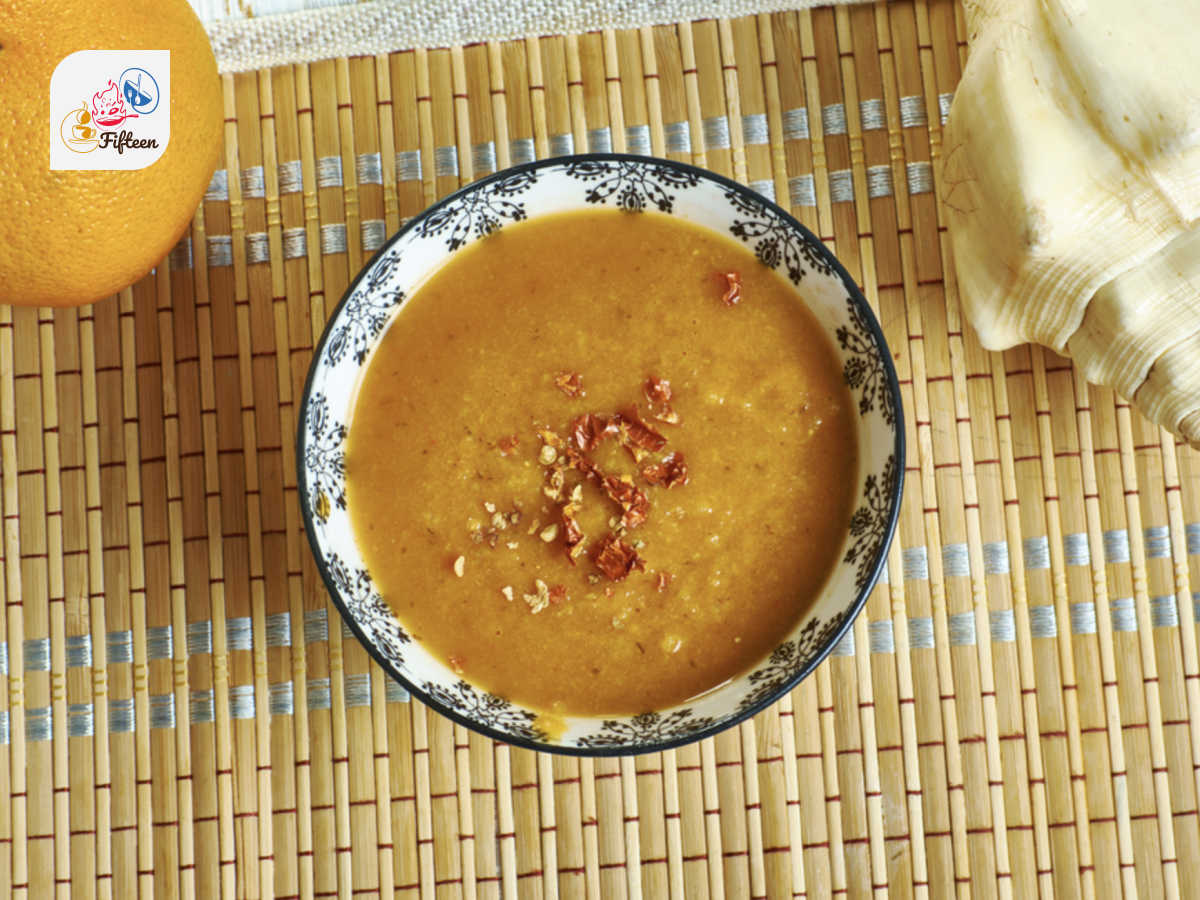
Madrouba is a traditional chicken porridge in Qatar. This chicken porridge calls for overcooked rice, tomatoes, onions, ghee, and various spices.
Known for its signature spicy kick, Madrouba is beautifully balanced with dried limes.
“Madrouba,” which translates to “beaten rice,” hints at this chicken porridge’s consistency, achieved through long, patient simmering. Madrouba takes time and is always served piping hot for a satisfying main course.
Harees
Traditional
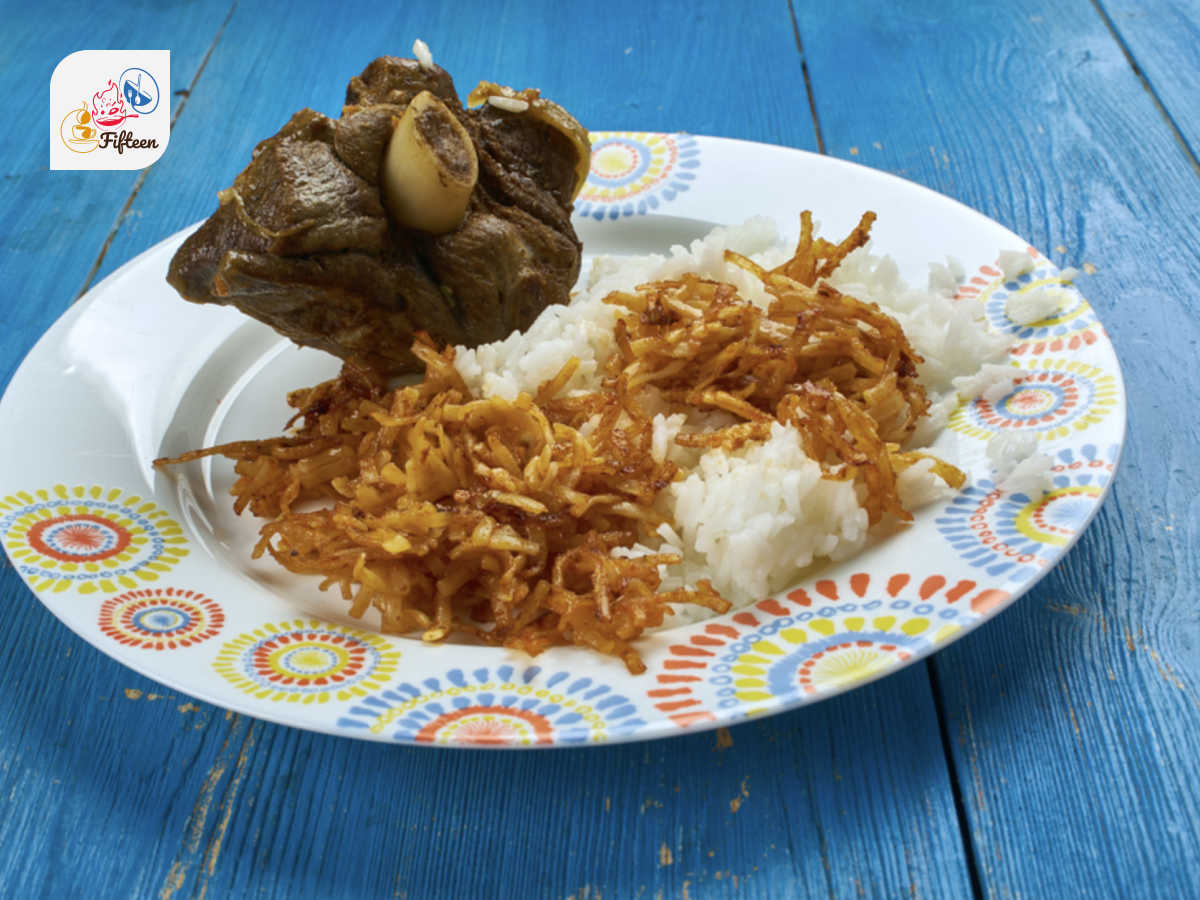
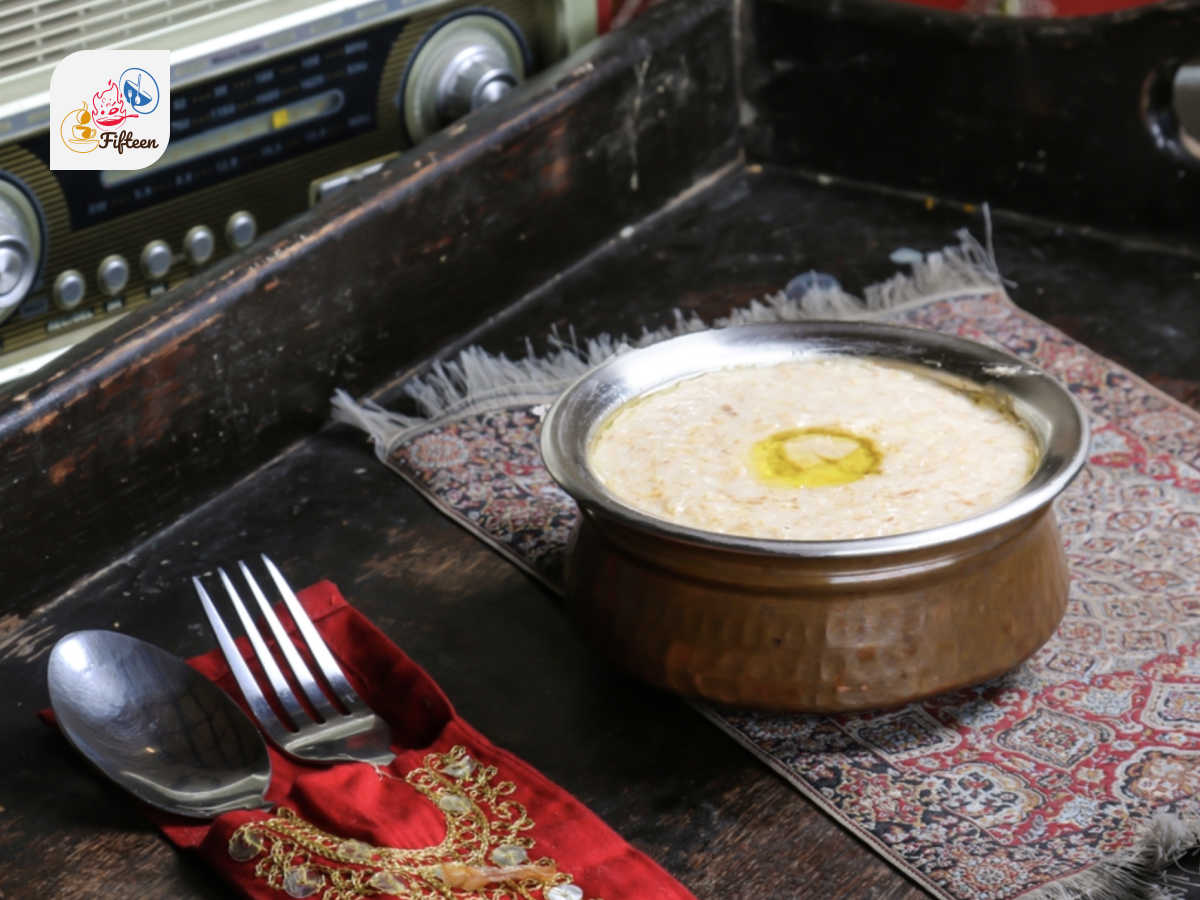
Harees is a porridge with equal parts wheat berries and meat. Originating from the Arabian Peninsula, this treat is also popular in Qatar.
It includes meat, usually lamb or chicken, cooked in ghee with aromatic spices. Locals boil harees until the ingredients blend into a thick texture. This wheat berry porridge is also compared to haleem, a similar porridge but with a higher meat-to-wheat ratio.
Though the preparation process is time-consuming, harees is an inexpensive, healthy main course and a superb takeaway item.
As a Ramadan staple, this porridge is also popular in the Middle East, parts of Africa, Armenia, and India.
Thareed
Traditional
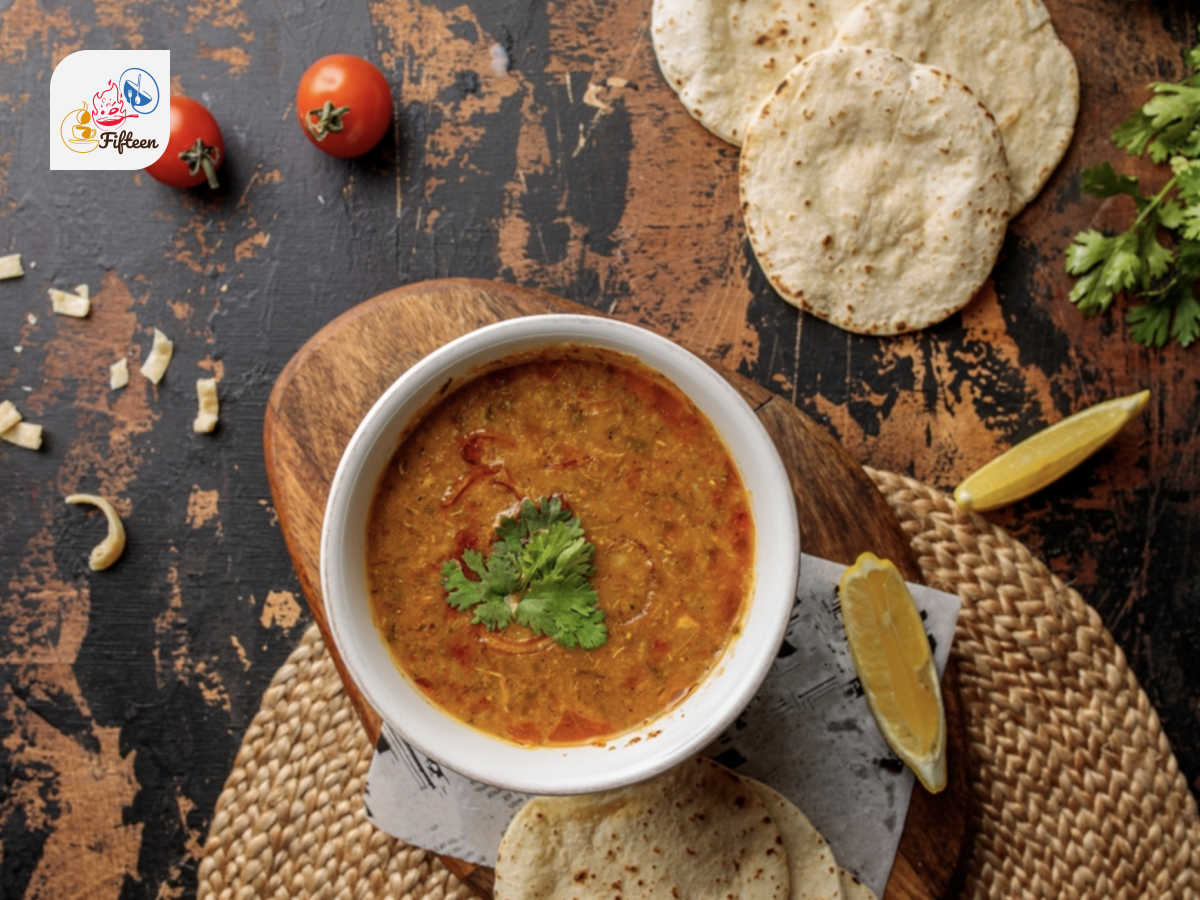
Thareed is a traditional bread soup available in Qatar. From the Arabian Peninsula, thareed’s origin traces back to the era of the Islamic prophet Muhammad.
This bread soup combines slow-cooked meat, vegetables, spices, and flatbread (often the Qatari khobes rgag).
Thareed’s spotlight is the flavorful broth, where locals soak the bread. Served with extra flatbread on the side, this bread soup is particularly sought-after during Ramadan.
Umm Ali
Traditional
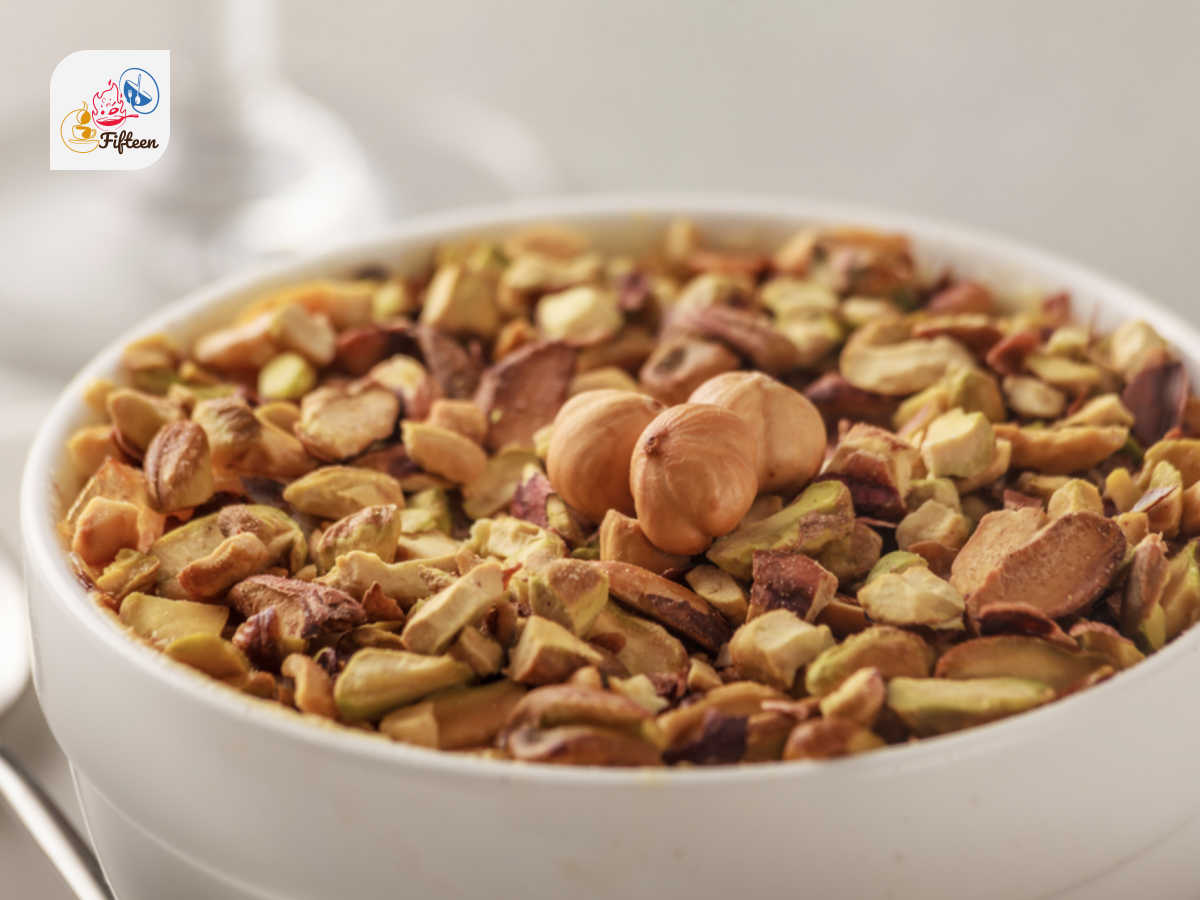
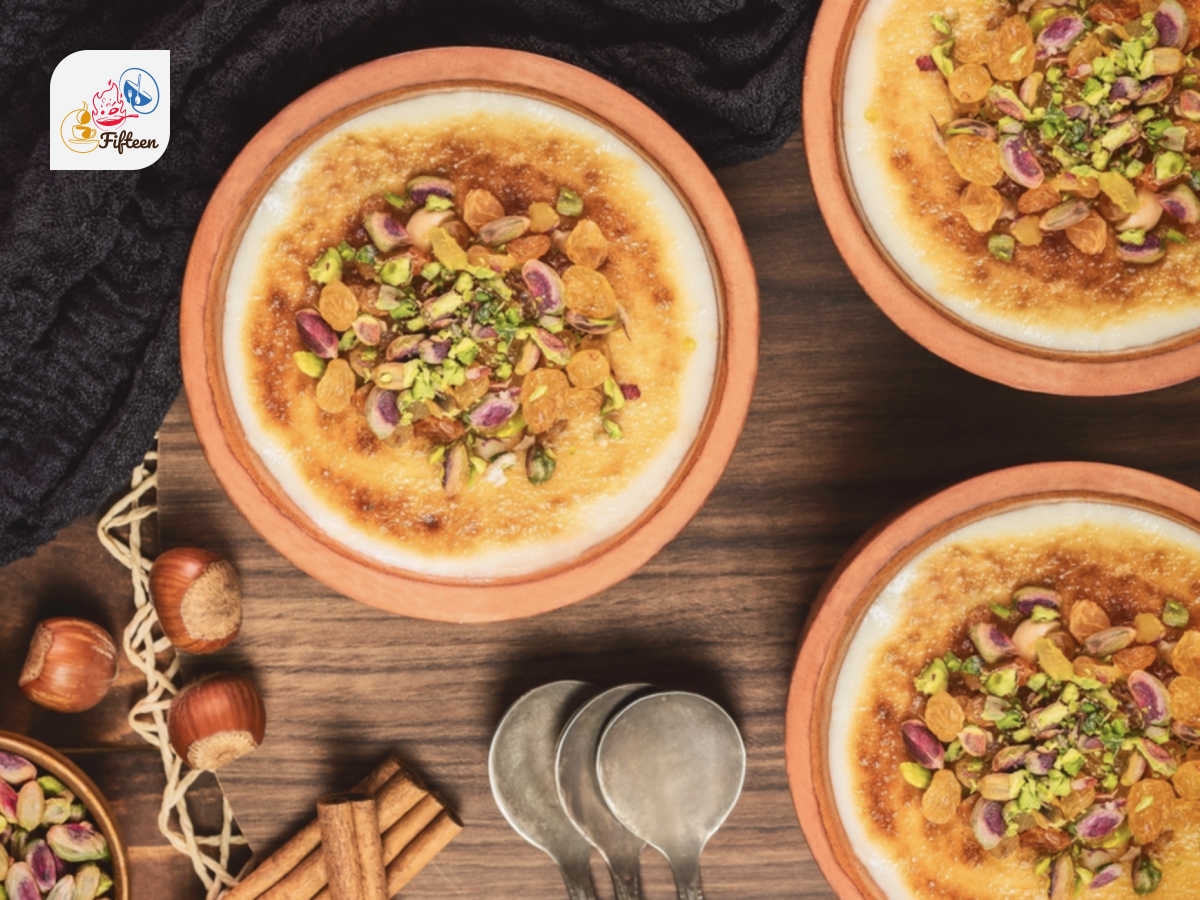
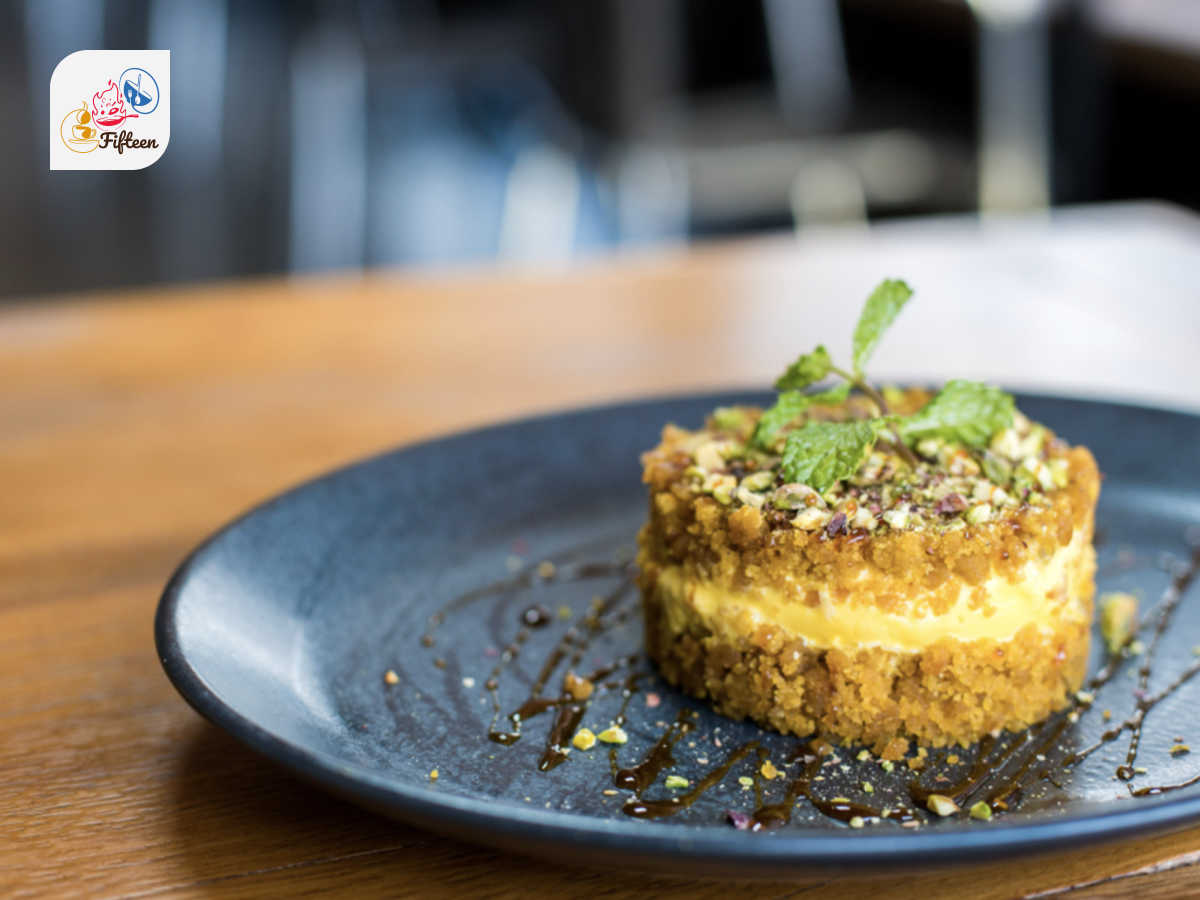
Umm Ali, also known as “Ali’s Mother,” is a traditional Qatari dessert. It’s made from pieces of pastry or puff pastry mixed with milk, cream, sugar, and a variety of nuts like pistachios, almonds, and sometimes raisins or dried coconut flakes.
The mixture is baked until it achieves a creamy, custard-like texture with a golden, crispy top. Locals often serve this dessert warm and enjoy it during gatherings.
Khabees
Traditional
Khabees is a traditional dessert in Qatar. It comes from the Arabian Peninsula, first documented in the 10th century.
Khabees consists of toasted wheat flour or semolina, water, salt, spices, and ghee, with optional nuts.
Khabees’ batter is fried or toasted. Typically served as a breakfast dish, this sweet treat also holds significance during Ramadan.
Balaleet
Traditional
Balaleet is a well-loved dish in Qatar hailing from the Arabian Peninsula. As a favorite during Ramadan, Balaleet brings together cardamom, saffron, and rose water. The vermicelli is cooked with sugar in cooking oil until it becomes sweet and crispy or soft.
You can pair Balaleet with an omelette for breakfast or enjoy this vermicelli dessert alone as a dessert. Balaleet is also great with potatoes, sauteed onions, and boiled peas for an extra savory note. This vermicelli dessert is tasty, whether hot or cold.
Samboosa
Street Food
Traditional
Samboosa is a handheld fried pastry in Qatar with roots in the Middle East. Samboosa’s dough is made from all-purpose flour, water, baking powder, vegetable oil, and eggs.
This dough wraps around a savory filling of minced meat, onions, and spices before being baked or deep-fried.
Samboosa has several alternative names, like samosa or sumbusa. This fried pastry is also popular in East Africa, South Asia, and Central Asia.
Qatari samboosas are smaller than the Indian ones and are everywhere during Ramadan. You’ll also find them as a snack, appetizer, street food, or even a main course.
Khubz
Traditional
Khubz is a classic Qatar bread originating from the Middle East with different names, like Kuboos, Khobez, or Khubez. This baked bread is made with wheat flour, water, yeast, sugar, salt, and oil.
This bread is also a wrapper or a spoon to scoop up gravy or sauces. Khubz is commonly larger than pita bread, but its functionality is similar.
Khubz has a unique puffy texture with an empty pocket inside to hold fillings. This bread is also a good side dish for stews and curries.
Warak Enab
Traditional
Qatari warak enab consists of grape leaves stuffed with a flavorful mix of rice, herbs, and spices, and sometimes meat.
The preparation involves blanching the leaves, stuffing them with the seasoned mixture, and then cooking them until tender.
Warak Enab is normally served as an appetizer or main course, accompanied by yogurt or a lemony garlic sauce.
Khanfaroosh
Traditional
Khanfaroosh is a traditional Qatari fried cake or doughnut made from a batter of flour, eggs, cardamom, saffron, and rose water.
It’s an ideal dessert here, known for its light, fluffy texture and sweet flavor. Once the batter is prepared, it’s deep-fried until golden brown and then often dusted with powdered sugar or drizzled with honey or date syrup.
Khanfaroosh is especially popular during Ramadan and other festive occasions.
What Is The History of Qatari Dishes?
Qatari delicacies’ history starts with the nomadic Bedouin culture, with notable input from the Levant, North Africa, Ottoman Empire, and South Asia. In previous centuries, Qataris mainly lived off the land and the sea.
However, with the skyrocketing standard of living, Qatar has experienced a significant shift towards modernity and higher culinary sophistication. Still, Qatar’s arid climate necessitates the importation of a substantial proportion of ingredients.
What Qatari Beverages to Pair with Dishes?
Qatari often uses these 2 drinks to pair with their traditional foods: Coffee and Karak Chai. Each beverage has its unique characteristics. You’ll learn about both drinks in the table below.
Beverages
Description
Coffee
Known as Gahwa
Served without milk and sugar
Made from Arabica coffee bean
An important aspect of hospitality
Karak Chai
A type of strong tea popular in the Gulf countries
The national drink of Qatar
A mixture of black tea, milk, and aromatic spices
Stronger and creamier than regular tea
Lastly, try these Qatari dishes and immerse yourself in the culinary delight of Qatari cuisine. If you enjoyed reading this useful article, please share and comment to spread the love of Qatari cuisine with others. Many thanks!
Home Cooking, Meal Planning, Recipe Development, Baking and Pastry, Food Editor, Cooking-video Maker, Western Food Evaluation Expert
Education
Le Cordon Bleu College of Culinary Arts
Program: Bachelor’s degree in Culinary Arts
Focus: Gained foundational knowledge in French and European culinary techniques. Participated in workshops and hands-on training sessions under the guidance of seasoned chefs.
Local Community College, New York, NY
Program: Associate’s Degree in Nutrition
Focus: Acquired basic understanding of nutrition principles, dietary needs, and the importance of balanced diets in daily life.
Jamie Scott is a skilled culinary expert and content creator specializing in Western cuisine. With over 15 years in the culinary field and formal training from Le Cordon Bleu, Paris, Jamie deeply understands how to blend nutrition with delicious flavors. His passion for cooking matches his commitment to making healthy eating accessible and enjoyable.
On Fifteen.net, Jamie brings a fresh perspective to classic dishes and beverages, offering readers insightful recipes, cooking tips, and a fresh view on meal planning that emphasizes taste, health, and simplicity.


Jamie Scott
Editor in Chief, Senior Content Writer
Expertise
Home Cooking, Meal Planning, Recipe Development, Baking and Pastry, Food Editor, Cooking-video Maker, Western Food Evaluation Expert
Education
Le Cordon Bleu College of Culinary Arts
Local Community College, New York, NY
Jamie Scott is a skilled culinary expert and content creator specializing in Western cuisine. With over 15 years in the culinary field and formal training from Le Cordon Bleu, Paris, Jamie deeply understands how to blend nutrition with delicious flavors. His passion for cooking matches his commitment to making healthy eating accessible and enjoyable.
On Fifteen.net, Jamie brings a fresh perspective to classic dishes and beverages, offering readers insightful recipes, cooking tips, and a fresh view on meal planning that emphasizes taste, health, and simplicity.